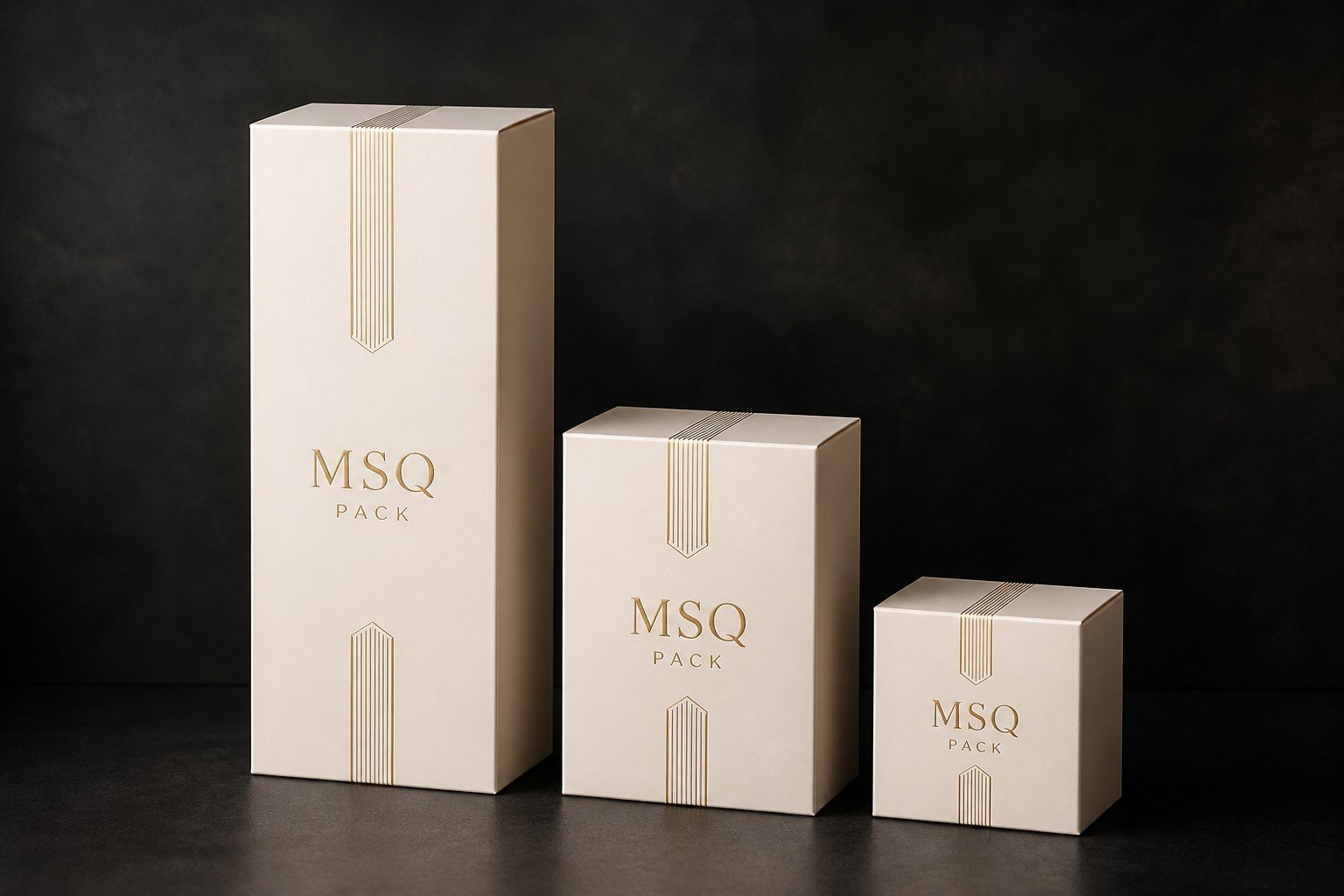
 Folding cartonGrade + PT/mm + GSM
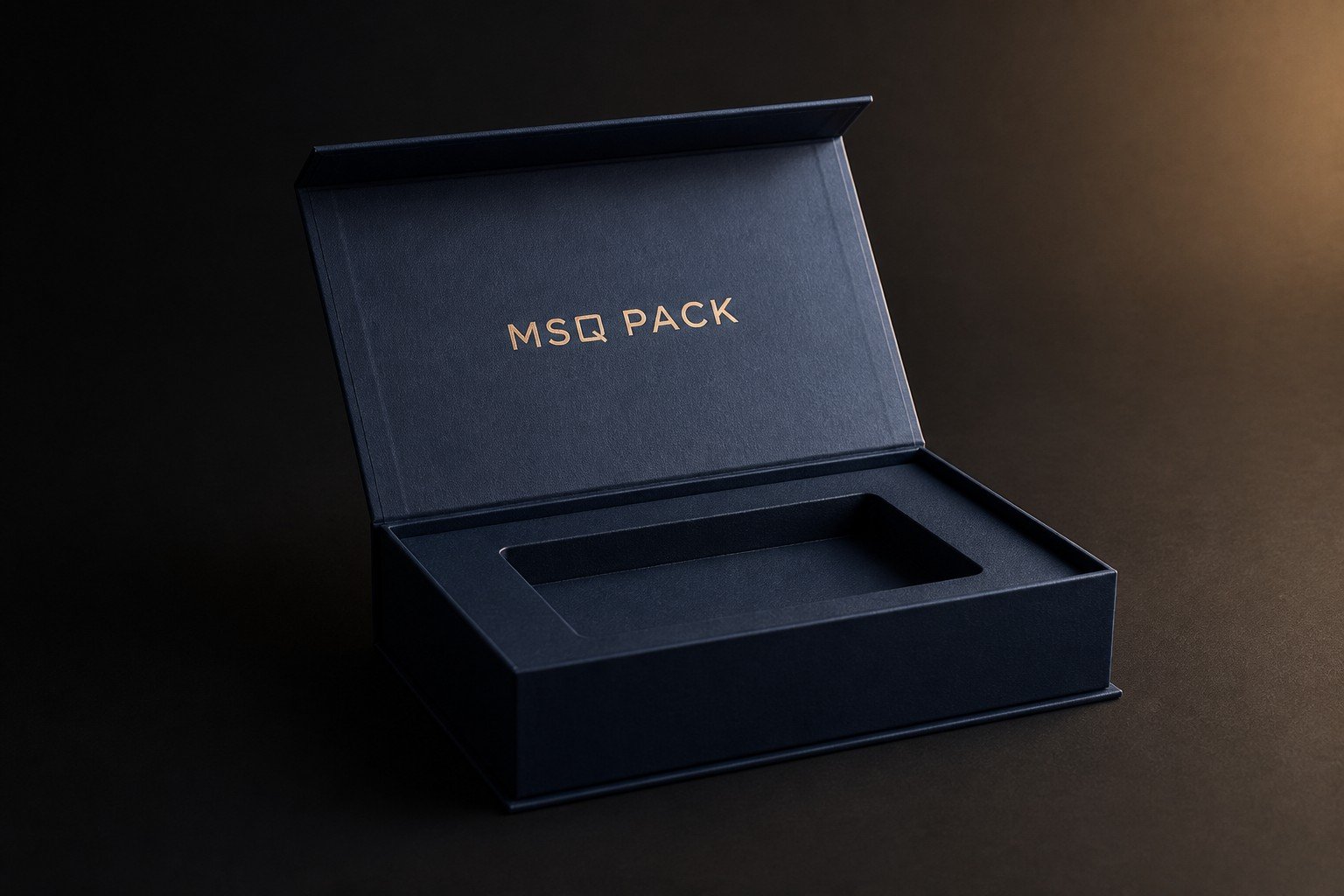 Rigid boxCore grade + mm + wrap
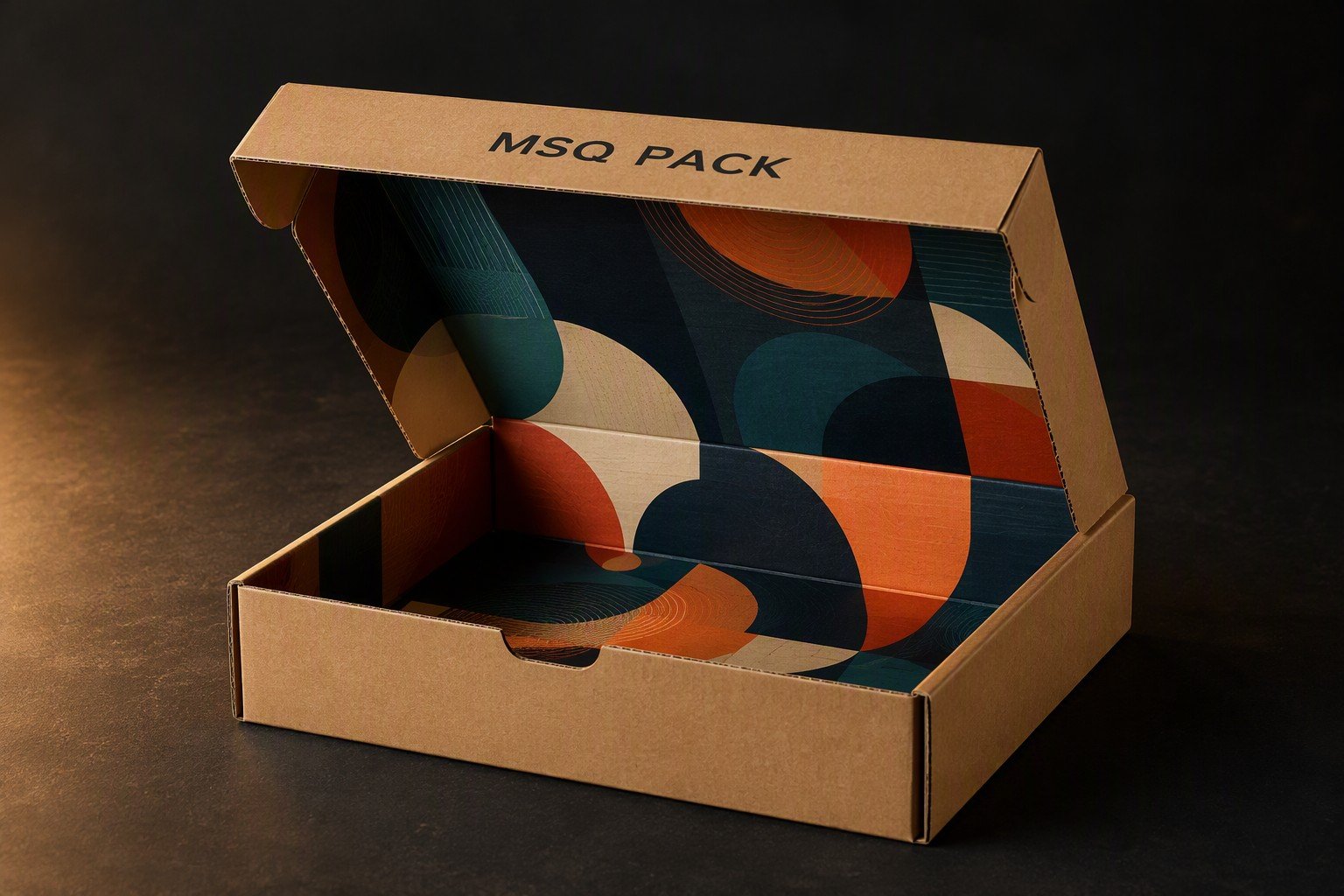 Corrugated mailerFlute + wall + board grade
Direct answer: Do not specify a custom box with GSM alone. For folding cartons, state the board grade, caliper in points or millimetres, and basis weight. For rigid boxes, specify the greyboard core thickness and the wrap separately. For corrugated packaging, identify the flute profile, wall construction, liners and the performance requirement. Confirm the final choice with the real product, finished dimensions and a controlled physical sample.
GSM, PT and flute describe different properties
| Term | What it measures | Where buyers see it | What it does not prove |
|---|---|---|---|
| GSM | Mass in grams per square metre | Paper, paperboard, wrap papers and liners | Exact thickness, stiffness or box strength |
| PT / point | Caliper; 1 pt = 0.001 in = 0.0254 mm | Folding-carton paperboard, especially North American specifications | Board grade, density or conversion performance |
| Millimetres | Physical thickness | Greyboard cores, paperboard and finished combined board | Material density or finished-package performance |
| Flute profile | Corrugated medium geometry and frequency class | Mailer boxes, shipping cartons and corrugated inserts | The complete board grade or box compression result |
How to specify board by box structure
Folding cartons: name the grade before the number
Start with the intended board family—such as solid bleached, recycled or kraft-based paperboard—then request the supplier's nominal caliper and GSM for the exact grade. A folding carton also depends on grain direction, score design, coating, print coverage, windowing, product load and storage conditions. Paperboard commonly spans a broad caliper range, so a number without the grade is not a complete specification.
Review folding-carton structures and compare the product load, closure and print requirements before choosing a board.
Rigid boxes: separate the hidden core from the visible wrap
A premium rigid box is normally a wrapped construction. Specify the greyboard or chipboard core by grade and nominal thickness in millimetres, then define the printed or specialty-paper wrap, inside liner, edge treatment, insert and closure independently. Larger spans, heavy products, deep lids, collapsible joints and tight corner requirements can change the appropriate core construction.
Thicker is not automatically better. Extra core thickness may increase weight, affect wrapped corners and change the fit between lid, base and insert. Use a representative sample to approve rigidity, opening feel, alignment and finished dimensions. See the rigid gift box range.
Corrugated mailers: flute is only one part of the board
Corrugated board combines linerboard with a fluted medium. The Fibre Box Association notes that larger flute profiles generally favour cushioning and vertical compression, while smaller profiles can improve graphics and suit compact retail structures. However, profiles vary, so flute name alone is not a performance specification.
State the intended flute, single- or double-wall construction, liner and medium information available from the supplier, print route, finished dimensions, product mass, pack-out and distribution requirement. Where stacking or shipping performance matters, agree the appropriate board or finished-box test rather than assuming caliper equals strength. Compare corrugated and mailer box structures.
What actually drives the material decision?
| Decision input | Why it matters | Evidence to review |
|---|---|---|
| Product dimensions and mass | Changes panel span, bulging risk, insert load and handling | Product drawing, weight and centre-of-mass notes |
| Fragility and surface sensitivity | Determines restraint, cushioning and contact-surface needs | Damage modes and representative product samples |
| Box structure and closure | Affects load paths, scoring, joint design and opening feel | Dieline, white sample and assembled sample |
| Print and finish | Board surface and conversion route affect colour, cracking and registration | Material swatch, artwork and printed sample |
| Distribution route | Parcel, pallet and retail handling create different hazards | Pack-out, master carton and route assumptions |
| Climate and storage | Paper-based materials respond to moisture and conditioning | Destination, warehouse and test-conditioning brief |
A clearer board specification for an RFQ
Avoid writing only “350 GSM cardboard box.” A more reviewable request separates confirmed requirements from supplier recommendations:
- Product: finished dimensions, net mass, fragile areas and orientation
- Structure: folding carton, wrapped rigid box or corrugated mailer, with reference dieline
- Board: proposed grade plus nominal caliper and GSM; or core thickness; or flute and wall construction
- Surface: print route, coating, lamination, foil, embossing or other finish
- Insert and pack-out: material, product retention, accessory positions and master-carton quantity
- Approval: material swatch, structural sample, printed sample and agreed measurements
- Open item: supplier to recommend and explain any alternative construction
This format helps suppliers quote the same construction and makes substitutions visible. Use the complete custom packaging RFQ checklist before comparing prices.
Approve the measured sample, not only the material label
- Record the exact material name, supplier grade and nominal values used in the sample.
- Measure critical finished dimensions and, where relevant, board caliper using an agreed method.
- Load the actual product and accessories; check fit, movement, deformation and presentation.
- Review scoring, corner quality, wrap adhesion, print, foil, embossing and other finishes.
- Confirm the shipping carton and distribution assumptions separately from the retail box.
- Freeze the approved sample, dieline revision and written specification before production.
For higher-risk projects, connect this approval to the sample approval guide, inspection checklist and transit test brief.
Common specification mistakes
- Treating GSM as a guaranteed thickness or strength value.
- Using one material number for both the rigid core and decorative wrap.
- Requesting “E-flute” without liners, wall construction, print route or performance need.
- Increasing thickness without checking freight, folds, joints, lid fit and assembly.
- Approving a flat sheet but not the converted, filled and packed box.
- Allowing production substitutions without a controlled change and re-approval process.
Frequently Asked Questions
Is GSM the same as paperboard thickness?
No. GSM measures mass per unit area, while caliper measures physical thickness. Two boards with the same GSM can have different thickness and stiffness because their density and fibre structure differ.
What does PT mean in folding carton specifications?
PT means points, where one point equals 0.001 inch or 0.0254 millimetres. It is a caliper measurement, not a basis-weight measurement.
Can GSM be converted directly to PT?
Not reliably without the specific board grade and supplier data. Density varies, so a universal GSM-to-PT conversion can create an incorrect specification.
How should rigid-box greyboard be specified?
Specify the core board grade and nominal millimetre thickness, then list the wrap paper, liner, insert and finished-box requirements separately.
Is E-flute always thinner than B-flute?
E-flute is generally a smaller profile than B-flute, but finished board caliper and performance vary with the corrugator profile, liners, medium and manufacturing conditions.
Does a thicker board always make a better box?
No. Excess material can add cost, freight weight and conversion difficulty. The correct choice must balance product load, dimensions, structure, print, handling and distribution risk.
What should a buyer approve before mass production?
Approve the named material construction, measured caliper where relevant, finished dimensions, product fit, print and finish appearance, assembly, pack-out and any project-specific performance checks on a controlled sample.
Industry references
Definitions and selection principles were cross-checked against the Paperboard Packaging Council's paperboard properties guide and the Fibre Box Association's corrugated construction and flute overview. Project specifications still require the selected supplier's current data and a production-representative sample.
Build a Reviewable Board Specification
Send your product dimensions, weight, target box structure, market, quantity, artwork and shipping route. MSQ PACK can organize the board, sample and approval questions for a project-specific quotation.