Molded Pulp vs EVA vs Paperboard Inserts: A Packaging Selection Guide
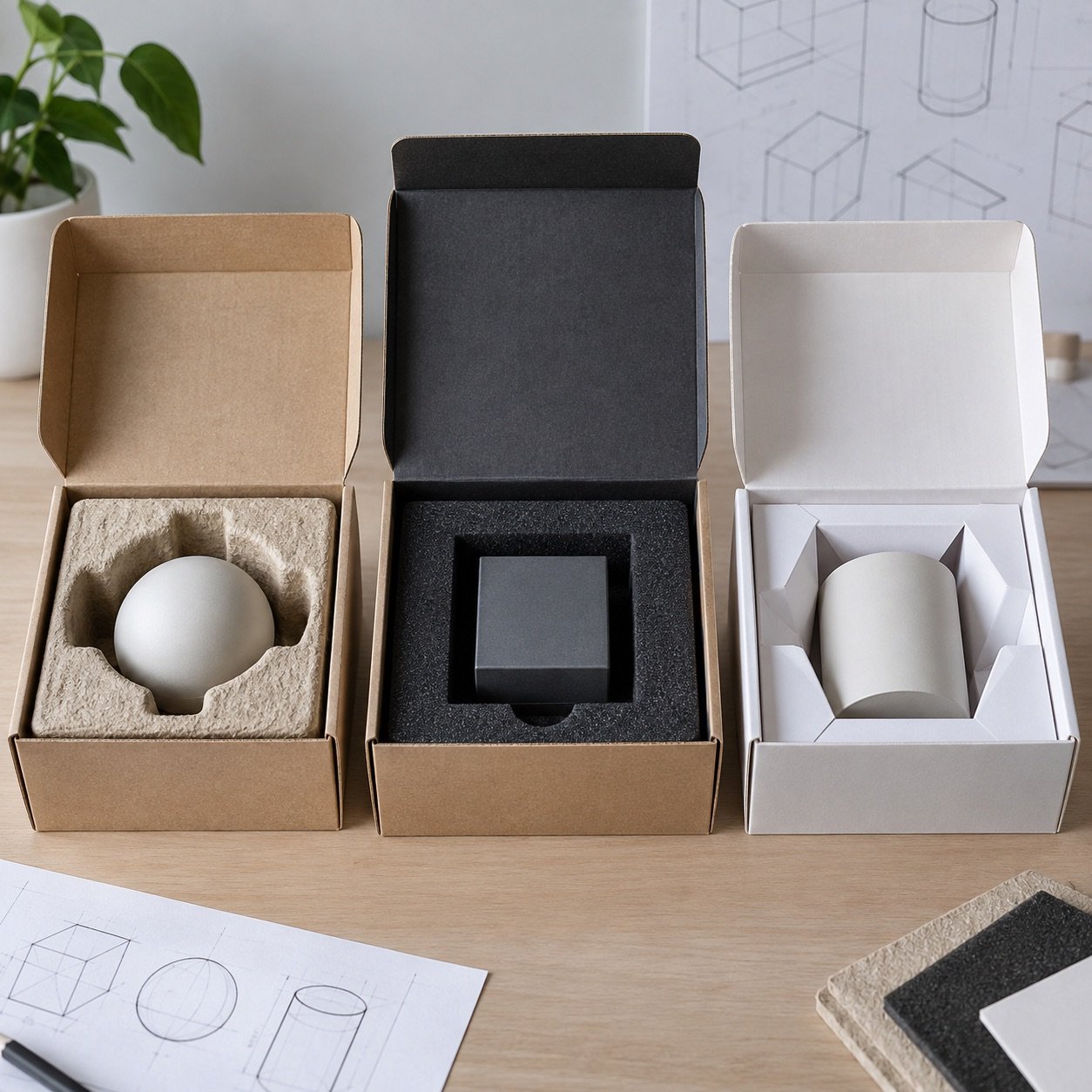
Direct answer: Molded pulp suits shaped fiber-based protection, EVA offers precise cushioning and a premium presentation, and folded paperboard provides a lightweight printable structure. The correct insert depends on product fragility, geometry, pack-out speed, presentation, material strategy, order volume and the transport test plan.
Compare the three insert systems
| Insert | Strength | Watch point |
|---|---|---|
| Molded pulp | Three-dimensional fiber form, nesting and protective ribs | Tooling, surface texture, moisture and dimensional tolerance |
| EVA foam | Clean cavities, color options and controlled cushioning | Material identification, odor, lamination and end-of-life route |
| Paperboard | Folded structure, printability and efficient flat components | Assembly time, tabs, edge load and moisture exposure |
Start with the product risk map
Record product mass, center of gravity, fragile surfaces, protrusions, accessories and unacceptable contact zones. Define whether the insert must protect against drop, vibration, compression, abrasion or movement during parcel distribution. A visually tight cavity can still transfer shock directly into a fragile component.
Evaluate packing and unboxing
Ask packers to assemble and load the sample using normal work instructions. Measure whether parts can be inserted in the wrong orientation, whether accessories migrate and whether removal feels intuitive. For premium packs, check finger access, reveal sequence and surface marks. For e-commerce, verify that the insert remains positioned after repeated handling.
Document the complete material stack
- Insert material, density or grade and color.
- Films, fabrics, coatings, laminations or adhesives.
- Component weight and dimensions.
- Tooling or cutting revision.
- Box, sleeve and accessory interaction.
- Approved recycling or disposal communication for the destination market.
Do not describe a multi-material laminated insert only by its visible top layer.
Prototype and approval sequence
- Review a white or unprinted structural prototype.
- Confirm product fit and accessory placement.
- Run the agreed transport and handling tests with the final product weight.
- Approve color, surface and printing on production materials.
- Approve a packed pre-production sample and packing instruction.
- Control revisions through the dieline, tool number and bill of materials.
Cost comparison beyond unit price
Compare tooling, insert unit cost, assembly labor, storage volume, nesting, damage reduction and material handling. A folded paperboard insert may arrive flat but require more packing steps. Molded pulp may nest efficiently but need tooling and moisture control. EVA can deliver precise presentation but adds cutting waste and may involve additional lamination. Model the complete packed cost at the expected order volume.
Information to freeze before mass production
Freeze the product revision, insert drawing, cavity clearances, material specification, color, surface treatment, adhesive, packing orientation and carton relationship. Mark critical-to-quality dimensions and define how they will be measured. If the product dimensions or center of gravity change, reassess the insert instead of assuming the previous design remains protective.
Frequently Asked Questions
Which insert is best for fragile electronics?
There is no universal answer. Map the shock-sensitive areas and validate the complete pack through the agreed transport tests.
Is molded pulp always plastic free?
Not necessarily. Review coatings, labels, adhesives and other components in the complete configuration.
Can EVA inserts be covered with fabric?
Yes, but the laminate, adhesive, edge finish, odor and material declaration should be approved together.
Are paperboard inserts suitable for heavy products?
They can be when the structural design and board grade are engineered for the load, but testing is essential.
What should an insert RFQ include?
Include product CAD or dimensions, weight, fragile zones, box size, accessories, presentation, material priorities, quantity and test plan.
Engineer the Insert Around the Product
Share the product dimensions, weight, risk points and packaging objective. MSQ PACK can compare insert structures and prepare prototypes for testing.